Top 5 Property Deal Sourcing Strategies for UK Investors in 2026
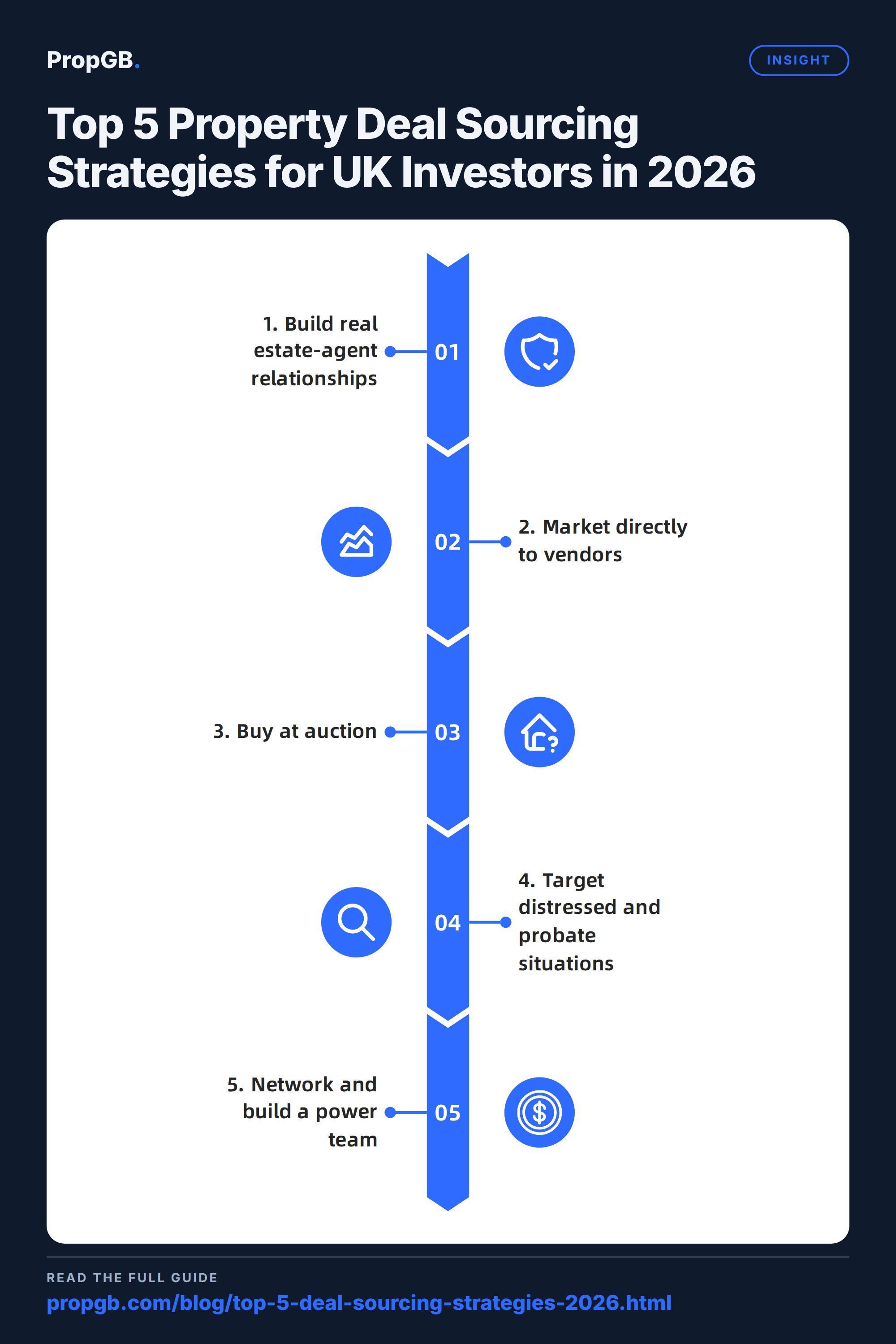
The best below-market UK property deals in 2026 are not hiding in one place, they come from five repeatable routes: strong estate-agent relationships, direct-to-vendor marketing, property auctions, distressed and probate situations, and investor networking. None is a magic trick. Each is a habit you build, and the investors who consistently buy well simply work several of them at once rather than waiting for a portal alert.
In a flat market, the price you pay is your margin. With growth no longer doing the heavy lifting, sourcing is the skill that separates investors who make money from those who merely own property. Here are the five strategies worth your effort this year, plus how to vet whatever they turn up.
1. Build real estate-agent relationships
Estate agents see motivated sellers before anyone else, and they value buyers who are fast, reliable and easy to deal with. If an agent knows you can proceed quickly, won't waste their time and will actually complete, they will pick up the phone to you before a property hits the portals. That early access is where many of the best deals are won.
The work here is relationship, not technology. Tell local agents exactly what you buy, in what areas and at what price, so you are easy to match. Be straight about your position, view promptly, and follow through on what you say. Agents repeat business with people who make their job simple, become one of those people in your patch and the calls start coming.
Agents don't reward the highest offer nearly as much as the most certain one. Be the buyer they trust to complete, and you'll see deals others never do.
2. Market directly to vendors
Going direct-to-vendor means reaching owners before they ever instruct an agent. Some sellers want a fast, discreet or hassle-free sale and will happily trade a little on price for certainty and speed. Leaflet drops, letters to targeted streets, local advertising and a simple website are the classic tools for reaching them.
Direct-to-vendor takes patience and volume, most contacts lead nowhere, but the deals it produces can be excellent because there is no competing buyer and no agent in the middle. Be professional and transparent at all times: you are dealing with people's homes and circumstances, and a fair, honest approach is both the right thing to do and what earns referrals down the line.
3. Buy at auction
Auctions are a reliable source of below-market and unusual stock, repossessions, probate sales, properties needing work and lots that don't fit a standard mortgage. The appeal is certainty: when the hammer falls, the sale is legally binding for both sides, so there's no gazumping and no months of uncertainty.
That certainty is also the risk. Because your winning bid is binding, you must do all the work before you raise your hand, read the legal pack, inspect the property, confirm your finance and set a strict maximum. Auctions reward the prepared and punish the impulsive. Done properly, though, they are one of the cleanest ways to buy at a genuine discount.
4. Target distressed and probate situations
Some of the strongest discounts come from circumstances rather than from haggling. Sellers facing repossession, financial difficulty, divorce, relocation or the administration of a deceased estate often prioritise a quick, certain completion over squeezing out the last few percent of value. For an investor who can move fast and offer reliability, that creates a genuine win-win.
These situations demand sensitivity above all. You're dealing with people at difficult points in their lives, so honesty, fairness and discretion are non-negotiable. Probate sales in particular can be slower and more complex legally, so factor in extra time and proper professional support. Handled well, this route combines real discounts with the chance to actually help a seller out of a tight spot.
5. Network and build a power team
Deals flow through people. Other investors, sourcers, brokers, solicitors, builders and letting agents all come across opportunities that don't suit them but might suit you, and they pass them to people they know and trust. Showing up consistently at local property meets and online communities puts you in that flow.
Networking also builds your "power team": the brokers, solicitors and trades who let you move quickly and credibly when a deal appears. That speed is exactly what makes agents and vendors choose you. The relationships compound, every good interaction makes the next deal more likely to land on your desk first.
How to vet a sourced deal
Finding a deal is only half the job; verifying it is the other half. A property marketed as "below market value" is only a deal if the numbers stand up to independent scrutiny. Never take a headline discount at face value, check everything yourself.
- Verify the value. Confirm the true market value with recent comparable sales of similar properties nearby, not the asking price or the sourcer's claim.
- Check the rent. Confirm the achievable rent against real, current local listings, then test the income with our rental yield calculator so you're judging it on net return, not gross.
- Cost the works properly. Get the refurbishment priced rather than estimated, and add a contingency for the surprises that nearly always appear.
- Run the full numbers. Include stamp duty (England & Northern Ireland residential SDLT runs 0% to £125k, 2% to £250k, 5% to £925k, 10% to £1.5m and 12% above, with a 5% additional-property surcharge on most buy-to-lets), fees and a higher interest-rate stress test. Our deal analyser brings cashflow, return on investment and that stress test together in one view.
- Do the legal due diligence. Check title, any existing tenancies, leases, planning and condition before you commit a penny. A solicitor earns their fee here.
Bringing it together
No single source will keep your pipeline full, so treat these five as a system rather than a menu, work agent relationships and direct-to-vendor marketing as your steady base, watch auctions for the right lots, stay alert to distressed and probate situations, and let networking keep the whole thing turning over. The more disciplined your sourcing, the better the raw material you have to work with, which matters even more if you're running a value-add strategy like the one in our complete BRRR guide for 2026. And because the discounts on offer shift with conditions, it pays to keep an eye on the wider picture in our May 2026 market update. The investors who win in 2026 will not be the ones with a secret source nobody else knows about; they will be the ones who show up consistently across all five routes and analyse harder than everyone else. Find well, vet ruthlessly, and the deals will look after themselves.